Category: Economy

  • Top Side Hustle 2025: Nigerians Can Earn ₦200k Monthly with SkoolMate EdTech

    Top Side Hustle 2025: Nigerians Can Earn ₦200k Monthly with SkoolMate EdTech

    As Nigeria’s gig economy grows, more people are looking for reliable side hustles that pay well and fit around their lifestyle. One of the most promising opportunities comes from SkoolMate, an education technology platform now recruiting commission-based sales agents across the country.

    EdTech on the Rise

    SkoolMate is an all-in-one school management system that digitizes everything from student records and results to staff management and communication. Importantly, it also includes a Computer-Based Test (CBT) module that allows schools to conduct internal exams digitally, curb malpractice, and better prepare students for external tests like WAEC, NECO, and JAMB.

    Industry observers say this feature sets SkoolMate apart in the crowded EdTech market, as schools increasingly adopt CBT to meet modern assessment standards.

    The Opportunity

    Under the new scheme, freelance agents will promote SkoolMate to school owners and administrators. For every subscribing school, agents earn 20% commission. With active participation, earnings could reach ₦50,000–₦200,000 monthly, alongside milestone bonuses for those closing multiple schools per month.

    Unlike a traditional 9–5 job, this side hustle offers flexibility. All that’s required is good communication skills, determination, and access to a smartphone with internet.

    Who Can Tap In?

    The opportunity is well-suited to:Teachers with wide school networks

    Freelancers looking for extra income

    Marketing professionals

    Young graduates and job seekers

    A Growing Trend

    Analysts note that roles like this are a reflection of Nigeria’s expanding gig economy, where performance-driven side hustles are becoming attractive alternatives to fixed employment. By tying income directly to results, agents can scale their earnings while helping schools transition into the digital era.

    How to Apply

    Interested applicants can contact SkoolMate directly:

    📱 WhatsApp: +234 813 018 4988

    📧 Email: enquiry@nucentury.org.ng

    With schools gearing up for the new academic session, demand for digital solutions is expected to rise sharply.

    For many, joining SkoolMate as a sales agent may prove to be one of the smartest side hustles of 2025.

  • SkoolMate Launches Commission-Based Sales Jobs in Nigeria | Earn ₦200k+ Monthly

    SkoolMate Launches Commission-Based Sales Jobs in Nigeria | Earn ₦200k+ Monthly

    SkoolMate, a leading education technology company focused on digitizing African schools, has announced a nationwide recruitment drive for commission-based sales agents in Nigeria.

    The initiative, according to the company, is designed to give self-driven individuals a chance to earn while promoting the adoption of school management technology across the country.

    “SkoolMate is simplifying school operations with our all-in-one solution. From student records to results, attendance, and communication, schools are finding it easier to run digitally. We also integrated a powerful Computer-Based Test (CBT) module that schools can use for internal exams, practice tests, and preparation for external examinations. This not only reduces malpractice but also builds students’ confidence in CBT formats widely used in WAEC, NECO, and JAMB,” the management said in a statement.

    Details of the Opportunity

    Agents will be tasked with pitching SkoolMate to schools in their areas.

    They will earn 20% commission for every school that subscribes.

    High performers stand to earn between ₦50,000 and ₦200,000+ monthly, with additional milestone bonuses.

    The role is flexible and freelance, requiring only communication skills, basic marketing ability, and access to a smartphone.

    Application Information

    Interested candidates are encouraged to reach out via:📱 WhatsApp: +234 813 018 4988

    📧 Email: enquiry@nucentury.org.ng

    The company emphasized that this opportunity is open to applicants nationwide, regardless of prior experience in technology or education.

  • Inflation, exchange rates and the social squeeze

    Inflation, exchange rates and the social squeeze

    Economic indicators released and reported this week paint a mixed picture: headline inflation has shown modest movement, but everyday Nigerians continue to feel pressure from food costs, utility bills and transport fares. Market trackers note that the naira — after months of volatility — has shown periods of stabilization in H1 2025, yet consumer purchasing power remains fragile in towns and cities where wages have not kept pace with rising costs.

    The fiscal picture is complicated by strong upstream revenues in parts of the energy sector even as government revenues face structural constraints; recent corporate earnings roundups suggest that a set of large companies posted strong mid-year revenues despite a rocky macro environment. Still, the day-to-day reality for many households is a “squeeze” scenario: families are rationing spending on health and education, and social safety nets are unevenly distributed.

    Policy responses under discussion include targeted cash transfers, expanded food subsidy pilots, and renewed dialogue about a living wage — all of which hinge on fiscal space and international investor confidence. Economists caution that short-term fixes without structural reforms (tax base widening, supply-side interventions in agriculture, and improved public service delivery) will only delay hard adjustments. For Nigerians dependent on informal incomes, the window for relief is narrow; the next policy moves from Abuja will be watched closely by markets and civil society alike.

  • Signs of Macroeconomic Shifts: Balance-of-Payments, Jobs and Food Programs

    Signs of Macroeconomic Shifts: Balance-of-Payments, Jobs and Food Programs

    Bloomberg’s analysis this morning flagged a notable development: Nigeria recorded its first balance-of-payments surplus in three years for 2024 after reforms that boosted oil and gas production and tightened currency management, although challenges remain in translating macro gains into broad-based income improvements. The surplus is an important signal to investors, but living-cost pressures and unemployment remain headline risks for households.

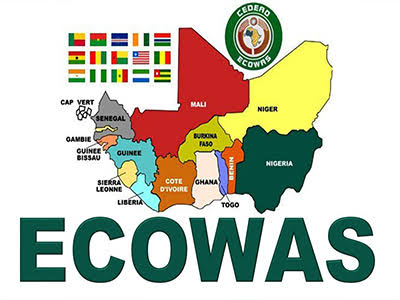
    On the social program front, ECOWAS initiatives promoting €4.5m in school-feeding models aim to combine nutrition with local procurement, hoping to support both child welfare and smallholder farmers. Locally, state governments continue school renovations and empowerment projects — notable stories today point to school turnarounds and vocational programs reaching thousands of pupils. Implementation fidelity and budget follow-through will be key measures to watch.

    At the state level, Lagos’s proposed innovation fund was pitched as also having a social angle: by accelerating startups, the government hopes to boost job creation for youth and create linkages to skill-training pipelines — but observers caution that job quality and sustainability (formal contracts, benefits) must be monitored if the program is to deliver meaningful welfare improvements.

  • Google’s ₦1.2 Billion Investment to Train Nigerian Youth in AI Skills

    Google’s ₦1.2 Billion Investment to Train Nigerian Youth in AI Skills

    Google has announced a ₦1.2 billion ($850,000) initiative dedicated to training young Nigerians in artificial intelligence (AI), as part of its broader Africa digital empowerment agenda.

    Unveiled in Lagos, the programme is designed to provide hands-on training in AI fundamentals, coding, and practical applications of machine learning. It targets university students, tech enthusiasts, and early-stage startups seeking to integrate AI into their solutions.

    Juliet Ehimuan, Google’s former Country Director for West Africa, noted that the initiative aligns with Nigeria’s ambition to become Africa’s leading technology hub. “AI is not just the future — it is the present. If Nigerian youth are empowered with these skills, they can innovate locally and compete globally,” she said.

    The training will be offered both online and through physical workshops in collaboration with Nigerian universities and innovation hubs. Google said the move follows its previous digital literacy programmes, which have already trained over six million Africans.

    Industry experts hailed the investment as timely, given the surge of AI applications across finance, agriculture, healthcare, and education. However, some analysts urged the government to provide supporting infrastructure, including reliable electricity and affordable internet, for such initiatives to succeed at scale.

    With Africa’s youth population projected to double by 2050, the tech giant believes the region’s next billion users will drive AI adoption if properly trained.

  • Tinubu Orders Streamlining of Government Agencies via Oronsaye Report

    Tinubu Orders Streamlining of Government Agencies via Oronsaye Report

    In a major governance overhaul, President Bola Tinubu has directed the full implementation of the long-dormant Stephen Oronsaye report, targeting a leaner, more efficient federal bureaucracy by dissolving, merging, or relocating numerous government agencies.

    At a Federal Executive Council (FEC) meeting in Abuja, the Minister of Information, Mohammed Idris, announced that Tinubu approved the restructuring, saying some agencies will be eliminated, others subsumed under existing ministries, and sections merged to reduce duplication and cut costs.

    Under the initiative, Nigeria is set to reduce its estimated 541 agencies down to around 161 entities, marking a sweeping contraction of the federal parastatal landscape . Specific changes include:

    Abolitions: Agencies like the National Senior Secondary Education Commission (NSSEC) will be scrapped, with functions transferred to the Federal Ministry of Education; the Pension Transitional Arrangement Directorate will fold into the Ministry of Finance.

    Mergers and Subsumptions: The National Agency for the Control of AIDS (NACA) will merge with the Nigeria Centre for Disease Control (NCDC); the National Emergency Management Agency (NEMA) will combine with the Refugees Commission (NCFRMI); regulatory bodies like NCC, NBC, and NIPOST will form a unified Communications Regulatory Authority of Nigeria.

    Relocations: Agencies like the Niger Delta Power Holding Company will move under the Ministry of Power, while others—including the National Blood Service and Nigerians in Diaspora Commission—will shift to more fitting ministries.

    Stakeholder response: Proponents applaud the measure as a pivotal step in reducing bureaucratic bloat and improving fiscal discipline. “This administration is showing resolve to optimize public resources,” said a policymaker familiar with the reforms.However, critics warn that the upheaval may sideline agency-specific mandates and delay service delivery as responsibilities are transferred or merged.

    Implications & Outlook: Observers expect immediate fiscal relief as recurrent expenditure obligations shrink. The success of the restructuring hinges on how seamlessly the transitions occur—especially regarding staff integration, fund re-allocations, and legal enactments. The government has reportedly set a 12-week timeline for full implementation, led by Secretary to the Government of the Federation, George Akume .Should the reforms proceed smoothly, Nigeria could emerge with a leaner, more cost-efficient federal apparatus—a critical signal to investors and donors alike.

  • NESG Calls for “Second Wave” of Reforms Ahead of Summit 31

    NESG Calls for “Second Wave” of Reforms Ahead of Summit 31

    The Nigerian Economic Summit Group (NESG) has called for a “second wave” of structural reforms to prevent the economy from slipping back into crisis, warning that recent gains from government policy could be short-lived without decisive follow-through.

    At a press briefing on Tuesday ahead of the 31st Nigerian Economic Summit (NES#31) scheduled for October 6–8 in Abuja, NESG leaders said Nigeria has seen modest improvements since the start of the year — including a more stable fiscal position and signs of renewed investor interest.

    But, they cautioned, inflation remains stubborn, growth is fragile, and confidence in the naira is far from restored.

    “Macro indicators are improving, but momentum is not the same thing as sustainability,” said NESG Chief Executive Officer Laoye Jaiyeola.

    “We need to pursue reforms that go beyond short-term fixes and address structural bottlenecks if we are to achieve inclusive prosperity by 2030.

    ”Themed “Agenda 2030: Pathways for Inclusive Prosperity,” the summit will bring together government ministers, corporate leaders, civil society, and international investors.

    Organisers said policy discussions would focus on power sector reforms, energy pricing, tax transparency, and digital transformation.

    Analysts note that the government has already taken politically sensitive steps in 2025, including currency devaluation and the partial removal of fuel subsidies.

    But the private sector is pressing for broader changes in public finance management, governance, and regulatory predictability.

    International partners are also watching closely. Foreign investors have welcomed Abuja’s rhetoric on reforms but remain cautious, with inflows lagging behind regional peers such as South Africa and Kenya.

    The NESG warned that failure to push through a deeper reform package could leave Nigeria vulnerable to external shocks, particularly fluctuations in oil revenue and global financial markets.Outlook:

    With the summit only weeks away, attention will be on whether President Bola Tinubu will use the platform to announce a clear roadmap into 2026. Stakeholders say the credibility of Nigeria’s reform agenda may hinge on what is unveiled in October.

  • Markets Bet on September CBN Rate Cut as Firms Delay Bond Issues

    Markets Bet on September CBN Rate Cut as Firms Delay Bond Issues

    Nigeria’s financial markets are bracing for what could be the first policy easing of the year, as traders and issuers bet the Central Bank of Nigeria (CBN) may lower its key interest rate in September.

    After holding the Monetary Policy Rate (MPR) steady at 27.5% in July, the CBN’s minutes showed a more cautious tone, but analysts at several investment firms say a cut is now “increasingly likely.” Rising market speculation has already caused several corporates to delay planned bond issuances, preferring to wait for potentially lower borrowing costs.

    “Businesses are reluctant to lock in at today’s high yields when there’s a strong chance of cheaper financing around the corner,” said a Lagos-based investment banker, speaking on condition of anonymity.

    While headline inflation remains above target, analysts argue that a combination of stabilising FX reserves, a firmer naira, and easing food-price pressures give the CBN space to consider a rate cut.

    Market watchers say a 25–50 basis point reduction is the most probable outcome if September’s inflation report shows continued moderation.

    The implications could be far-reaching: Banks would see cheaper funding costs but slimmer margins.

    Corporates could access bond markets more affordably.

    Households might benefit from lower lending rates, though gains could be slow to filter through.

    “The real test is whether easing policy now can support growth without reigniting inflation,” said economist Tola Oni, noting that Nigeria’s GDP expansion has been uneven in 2025.Outlook: All eyes are now on the August inflation data, due in early September. If the CBN does cut rates, it would mark the first signal of a looser monetary stance under Governor Olayemi Cardoso since his hawkish tightening cycle began late last year.